So, you have a tree that’s giving you the side-eye. Maybe it’s leaning a little too close to your house for comfort, or it’s cramping your garden’s style. You’ve decided it needs to go. The question is whether you grab a chainsaw yourself or call in a professional tree removal company.
This guide is the consolidated “DIY vs hire a pro” answer for New Jersey homeowners. It pulls the strongest points from several overlapping Tree Ya Later posts into one place: the hidden risks of DIY, when removal is actually needed, what professionals bring, how to pick a company, and why the cheap DIY path often isn’t cheap.
The hidden risks of DIY tree removal
Watching a tree fall can look simple. Getting it to fall where you want—and keeping people and property safe—is a different job.
Weight and gravity. Trees are heavy. A miscalculation can put timber on a roof, a car, or a neighbor’s fence. Homeowners’ insurance is rarely friendly when a DIY cut goes wrong.
Unpredictable movement. Even a “correct” fall can send branches snapping sideways. Trunks can roll or bounce. Decay inside a tree that looks solid from the outside can make the wood split or collapse in ways you would not expect.
Power lines. A limb tangled with a line can turn a cut into an electrocution risk. This is one of the main reasons trained crews and the right equipment matter.
Compromised trees. Disease, hollow trunks, storm damage, and unstable roots make a tree harder to read. Without training, it is difficult to judge stability before you start cutting.
Property and legal exposure. Trees near buildings, fences, vehicles, or power lines need controlled lowering—not a free fall. DIY work without required permits (where local rules apply) or without adequate insurance can leave you with fines, uncovered damage, or liability if someone is hurt.
Environment. Trees provide shade, habitat, and soil benefits. Careless removal and debris handling can do more harm than a planned professional job that accounts for cleanup and disposal.
When a tree may need to come down
Removal should be a last resort, but some situations call for it. Common signs from our safety guidance include:
- Dead or decaying branches that can drop without warning
- A leaning or unstable tree (root damage, wind, or soil issues)
- A damaged, hollow, or structurally weak trunk
- A tree that is overcrowding others, blocking needed work, or actively damaging property
If you are unsure, have a professional assess the tree before anyone climbs or cuts.
Why hiring a professional is different
Pros are not just “a bigger saw.” Trained crews assess tree health and structure, plan the fall or sectional dismantle, and use gear most homeowners do not own.
Safety and process. Industry practices—harnesses, rigging, controlled cuts, and clear work zones—reduce the chance of injury and collateral damage. Complex removals (tight yards, unstable limbs, compromised roots) are planned in stages instead of treated as one big cut.
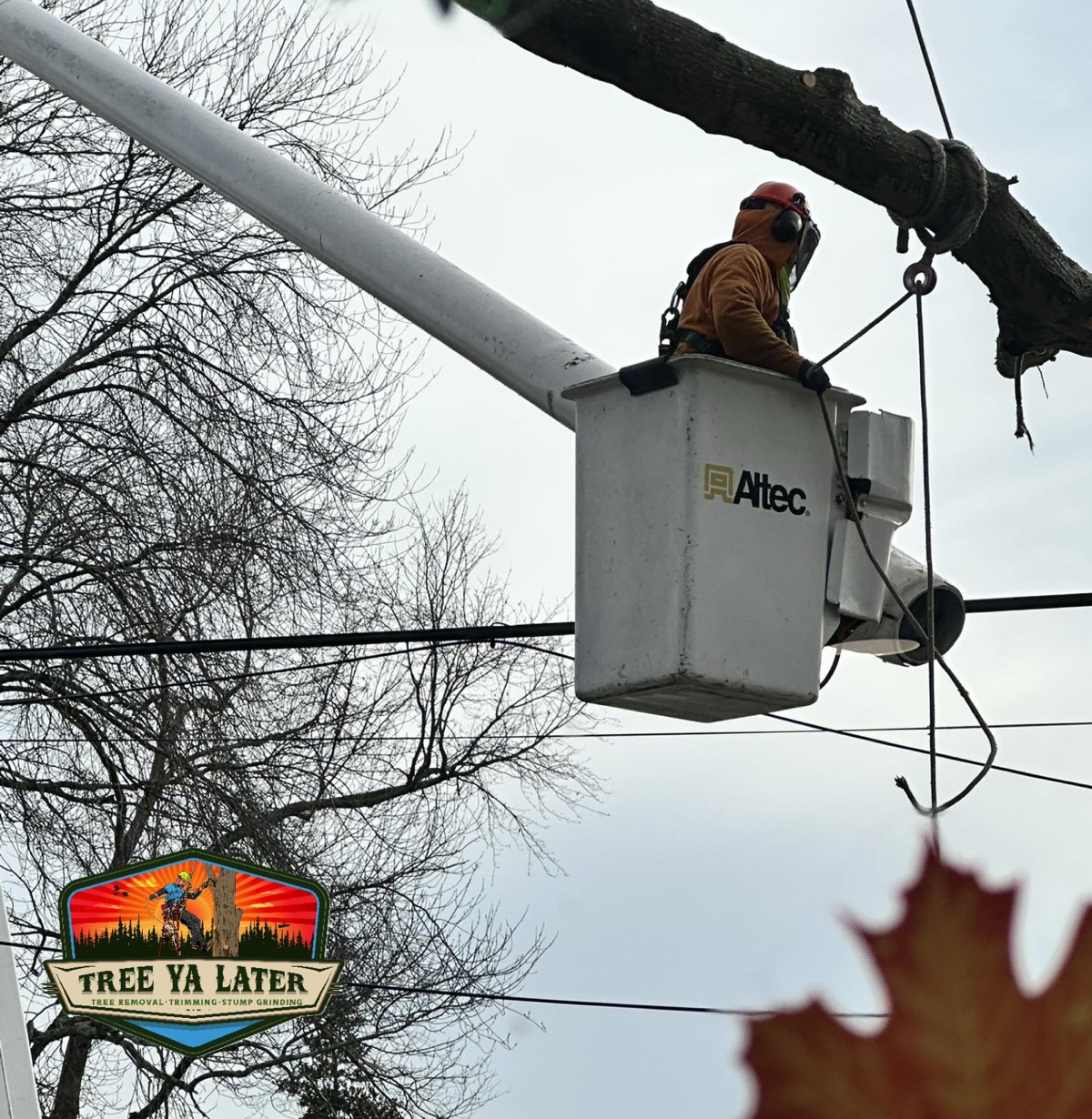
Equipment. Chainsaws alone are not enough for many jobs. Crews may use climbing gear, bucket trucks, cranes, chippers, and stump grinders so wood is lowered, processed, and hauled without improvising.
Time and total cost. DIY can stretch into days of disruption, plus rental tools, disposal fees, and the cost of fixing a mistake. A clear professional estimate covers labor, equipment, and cleanup so you are not surprised after the wood is on the ground.
More than the take-down. Many companies also handle trimming, stump grinding, debris removal, and emergency storm work. That keeps one accountable crew on the site from first cut through cleanup.
Insurance. Reputable companies carry coverage so you are not left holding the bill if something goes wrong on the job. DIY or an uninsured cutter can shift that risk back to you.
How to choose a tree removal service
Use this checklist before you hire anyone:
- Licensed and insured. Confirm training and insurance. Ask what the policy covers if property is damaged.
- Reputation. Read recent reviews and ask for references. Check for unresolved complaints.
- Detailed written estimate. Scope, price, stump grinding (in or out), hauling, and possible extras should be clear in writing.
- Equipment and methods. Outdated gear or vague answers about how they will protect nearby structures are red flags.
- Safety practices. Ask how they stage the job near homes and lines, and what PPE and protocols they use.
- Written contract. Work, price, and extras should be documented before the first cut.
- Communication and availability. Especially for storm or emergency work, you want a reachable crew with a realistic response plan.
- Related services. If you may need stump grinding, trimming, or cleanup, one qualified company often saves coordination headaches.
DIY vs pro: the budget story
People DIY to save money. Factor in the cost of a damaged roof, a totaled fence, medical bills, or a claim denial, and professional removal usually looks like the safer spend. Think of it as paying for a controlled outcome instead of gambling on a YouTube tutorial next to your house.
FAQ
How much does professional tree removal cost in New Jersey?
It varies with size, location, condition, and complexity. The reliable next step is a free, no-obligation estimate for your specific tree—not a one-size number from the internet.
What should I look for in a company?
Licensed and insured, clear written estimates, solid local reputation, and a crew that can explain how they will protect your property. Tree Ya Later is registered with the NJ Board of Tree Experts (NJTC #939213). Call (732) 372-3596 for an estimate.
Can I just prune it myself?
Light work on small, easily reached branches is one thing. Anything that needs height, power tools near structures, or cuts that change the tree’s balance is safer with a pro. Bad pruning can also harm the tree.
What about emergencies after a storm?
Fallen or leaning trees can threaten homes, lines, and roads. Professional emergency crews are set up for high-risk, time-sensitive removals—this is not a DIY moment.
Ready for help?
If a tree on your property needs to come down, skip the DIY gamble. Tree Ya Later can assess the job, walk you through options, and remove it safely.
Call (732) 372-3596 for a free estimate.
Tree Ya Later · NJ Board of Tree Experts registered, NJTC #939213