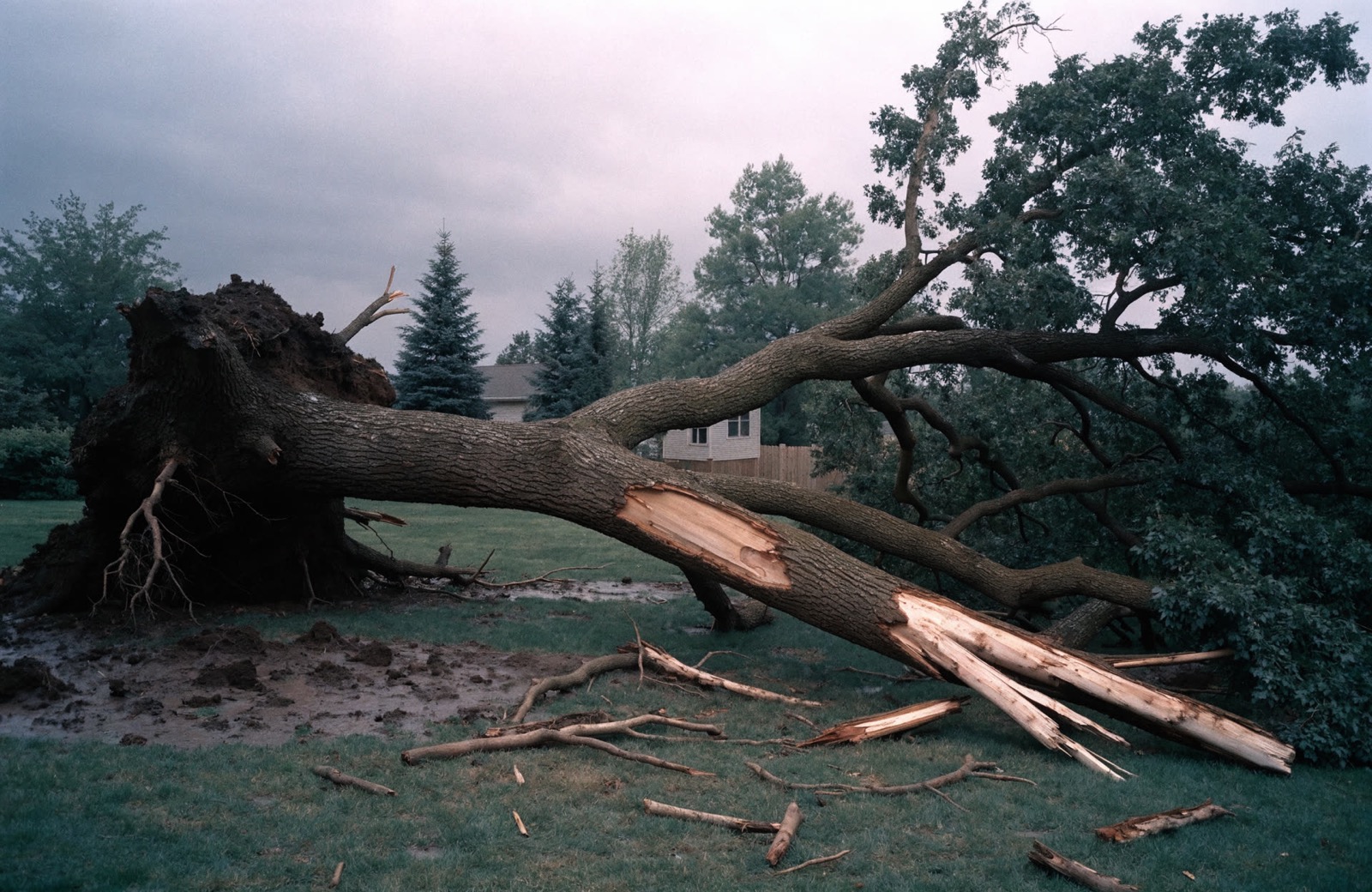
Summer in Ocean County, NJ. The sun is shining, the beaches are calling, and the sweet smell of saltwater is in the air. But let’s be honest, it’s not all sunshine and rainbows. We all know that with the summer heat comes the inevitable threat of a good old-fashioned Jersey storm. And while you’re busy stocking up on batteries and binge-watching your favorite shows, have you ever stopped to think about your leafy friends outside? Your trees?
Believe it or not, your trees need a storm-prep plan just as much as you do. A wild summer storm can turn your majestic oak into a projectile, and that’s a headache no one wants to deal with. So, let’s talk about how to protect your trees from storm damage in Ocean County, because the only thing that should be falling from the sky is rain, not a 50-foot maple.
Don’t Be a Sap: Why Storm Prep for Trees is No Joke
We get it. You’ve got a lot on your plate. But ignoring your trees before a storm is like playing a game of Russian roulette with your property. A single falling branch can cause thousands of dollars in damage to your home, car, or even your neighbor’s prize-winning gnome collection. And let’s not even talk about the cost of emergency tree removal. It’s enough to make your wallet weep.
But it’s not just about the money. It’s about safety. A falling tree can be a serious hazard to you, your family, and your pets. So, while it might be tempting to just cross your fingers and hope for the best, a little proactive tree care can go a long way in keeping your property and your loved ones safe. After all, your car may not appreciate a new, leafy hood ornament.
Know Your Enemy: Common Summer Storms in Ocean County
In Ocean County, we’re no strangers to a bit of dramatic weather. From thunderstorms that roll in with a vengeance to the lingering threat of tropical storms and hurricanes, our trees have to be ready for anything.
- Thunderstorms: These are the most common culprits of summer storm damage. The high winds and heavy rain can easily snap branches and even uproot entire trees, especially if they’re already weak or diseased.
- Tropical Storms and Hurricanes: These are the heavy hitters. The sustained high winds and torrential downpours can cause widespread damage, turning your beautiful backyard into a scene from a disaster movie.
Understanding the specific threats each type of storm poses is the first step in creating an effective storm-prep plan for your trees.
Tree-iage: Identifying At-Risk Trees on Your Property
Before you can protect your trees, you need to know which ones are most vulnerable. So, put on your detective hat and let’s do a little “tree-iage.” Here are a few things to look for:
- Dead or dying branches: These are the first to go in a storm. If you see branches that are leafless, discolored, or have peeling bark, it’s time to call in the professionals.
- Leaning trees: A slight lean might be okay, but if your tree looks like it’s auditioning for a part in a “Matrix” movie, it could be a sign of root problems. Your tree shouldn’t be doing the limbo.
- Cracks or splits in the trunk: These are serious red flags. A cracked trunk is a weak trunk, and it’s only a matter of time before it gives way.
- Signs of disease or decay: Look for mushrooms growing on the trunk, hollow spots, or large wounds that just won’t heal.
If you spot any of these warning signs, don’t panic. Just pick up the phone and call a certified arborist. They’ll be able to assess the situation and recommend the best course of action.
Getting Your Trees in Fighting Shape: A Pre-Storm Workout Plan
Once you’ve identified your at-risk trees, it’s time to get them in fighting shape. Think of it as a pre-storm workout plan for your leafy friends. Here are a few exercises to get you started:
- Pruning and Trimming: This is the most important thing you can do to prepare your trees for a storm. Removing dead, weak, or overgrown branches will reduce the risk of them breaking and falling during high winds.
- Cabling and Bracing: For trees with weak or split trunks, cabling and bracing can provide extra support and stability. It’s like giving your tree a set of crutches to help it stand up straight.
- Mulching: A healthy layer of mulch around the base of your trees can help retain moisture and protect the roots from damage.
While some minor pruning can be a DIY task, we strongly recommend leaving the heavy lifting to the professionals. A certified arborist has the training, experience, and equipment to get the job done safely and effectively.
The Aftermath: What to Do When a Storm Hits
So, a storm has come and gone, and your backyard looks like a war zone. Now what? First things first, stay safe. Avoid downed power lines and be on the lookout for hanging branches that could fall at any moment.
Once it’s safe to do so, it’s time to assess the damage. Take pictures of any damage to your property for insurance purposes. And if you have a tree that has fallen on your house or is blocking your driveway, don’t try to be a hero. Call a professional for emergency tree removal. They have the expertise to handle the situation safely and efficiently.
Why DIY Tree Care Can Be a Thorny Issue
We all love a good DIY project, but when it comes to tree care, it’s often best to leave it to the professionals. Attempting to prune or remove a tree yourself can be incredibly dangerous, especially if you don’t have the right equipment or training. And let’s be honest, a trip to the emergency room is a lot more expensive than hiring a certified arborist.
So, before you break out the chainsaw and start channeling your inner lumberjack, take a step back and think about the risks. Is it really worth it? Or would you rather kick back with a cold drink and let the professionals handle it? We think the answer is pretty clear.
Conclusion
Protecting your trees from storm damage is an essential part of being a homeowner in Ocean County. By taking a proactive approach to tree care, you can save yourself a lot of time, money, and heartache in the long run. So, don’t wait for the next big storm to roll in. Get your trees in fighting shape today!
Frequently Asked Questions (FAQ)
Q: How much does it cost to have my trees inspected?
A: At Tree Ya Later, we offer free, no-obligation estimates for all of our tree services. We’ll come out to your property, assess your trees, and provide you with a personalized storm-prep plan. No strings attached!
Q: Can I prepare my trees for a storm myself?
A: While some minor pruning can be a DIY task, we strongly recommend hiring a certified arborist for any major work, especially when dealing with large trees or storm damage. It’s a matter of safety and expertise.
Q: What are the signs of a healthy tree?
A: A healthy tree will have a strong, sturdy trunk, a full canopy of leaves, and no signs of disease or decay. If you’re not sure if your tree is healthy, give us a call and we’ll be happy to take a look.
Don’t wait for a storm to turn your beautiful trees into a costly headache. Book a free, no-obligation estimate with Tree Ya Later today! Our certified arborists will assess your trees and provide a personalized storm-prep plan. Click here to book your free estimate: https://clienthub.getjobber.com/booking/9637a187-236f-45f9-8739-dbef414b878c/