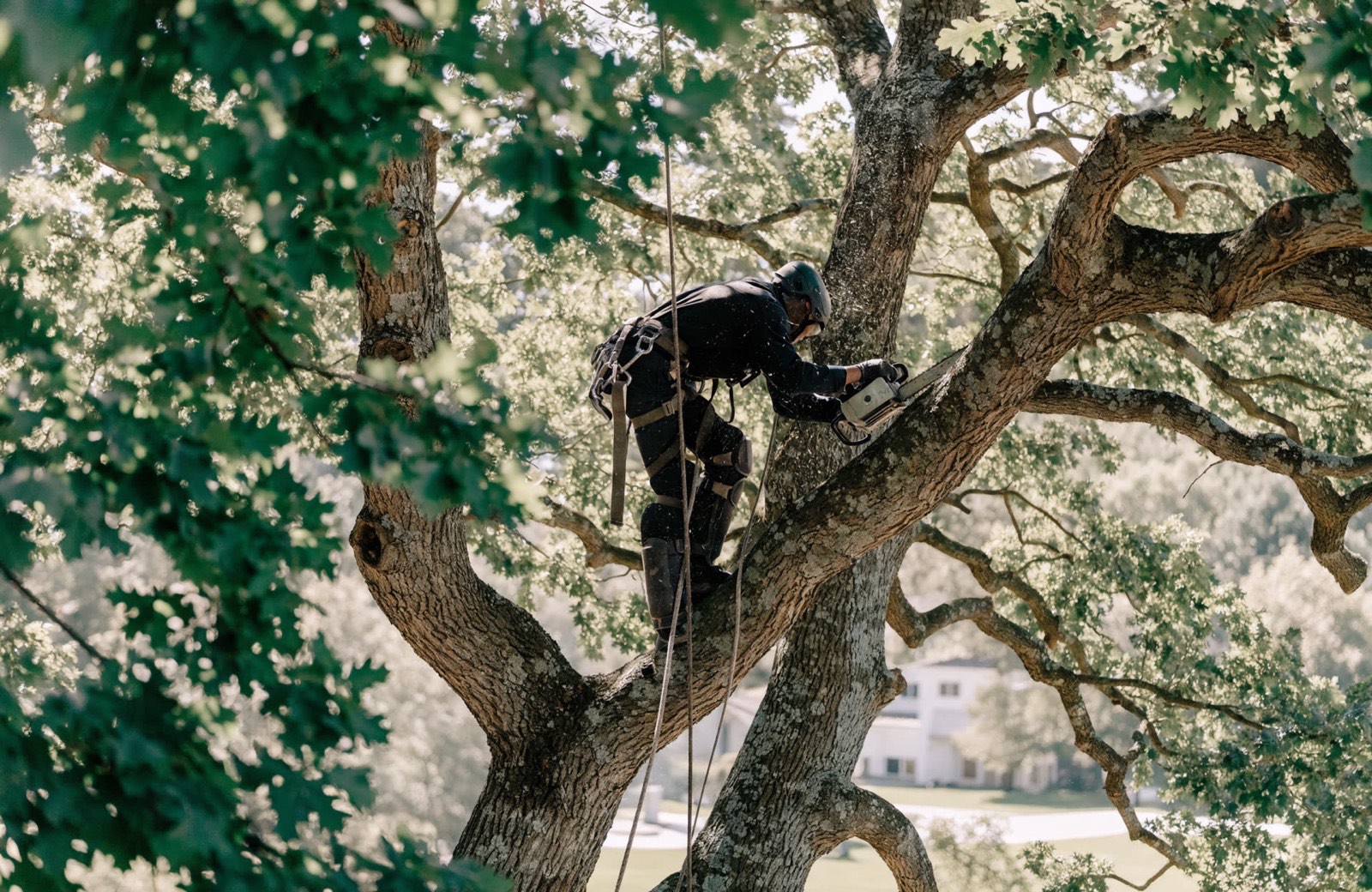
Let’s be honest, we all need a little extra support sometimes. Whether it’s a shoulder to cry on after a rough day or a friend to hold our hair back after a questionable life choice, support systems are crucial. Well, guess what? Your trees are no different. Sometimes, they need a little help to stay strong and majestic, especially when facing the wild weather we get here in New Jersey. That’s where tree cabling and bracing in NJ comes in, the arborist’s equivalent of a superhero cape for your leafy friends.
If you’ve ever looked at a tree in your yard and thought, “Hmm, that branch looks a little… precarious,” then this blog post is for you. We’re going to dive into the world of tree cabling and bracing, exploring what it is, when it’s needed, and why you should absolutely not try this at home. So, grab a cup of coffee, get comfortable, and let’s talk about giving your trees the support they deserve.
What in the World is Tree Cabling and Bracing?
Tree cabling and bracing might sound like something out of a medieval torture chamber, but we promise it’s much more pleasant for the tree. Think of it as orthodontics for your trees. Just as braces straighten teeth and improve their structure, cabling and bracing provide support to trees with weak or damaged limbs, helping them to grow strong and healthy.
Tree cabling involves installing high-strength steel cables between major limbs to help redistribute the load and reduce the strain on weak points. It’s like giving your tree a set of suspenders to hold up its heavy branches. The cables are attached using bolts or other hardware, and they are carefully positioned to provide the best possible support without harming the tree.
Tree bracing, on the other hand, is used to reinforce weak or split crotches (the V-shaped area where two or more limbs meet). This is done by inserting a threaded rod through the crotch and securing it with nuts and washers. It’s like putting a cast on a broken bone, providing rigid support to the weakened area and preventing further damage.
Is Your Tree Sending Out an S.O.S.? Signs It Needs Support
Trees are pretty good at communicating their needs, you just have to know what to look for. Here are a few signs that your tree might be crying out for some tree cabling and bracing in NJ:
- The Leaning Tower of… Your Yard: If your tree is starting to resemble a certain famous Italian landmark, it’s a pretty clear sign that it’s struggling to support its own weight. A significant lean can indicate root problems or a structural imbalance, and cabling and bracing can help to stabilize the tree and prevent it from toppling over.
- V is for Vulnerable: Trees with co-dominant stems, or “V-crotches,” are particularly susceptible to splitting, especially during storms. These crotches are a weak point in the tree’s structure, and they can easily break under the stress of high winds or heavy snow. If you have a tree with a V-crotch, it’s a good idea to have it inspected by a certified arborist to see if it needs bracing.
- Cracks and Splits: This one is a no-brainer. If you see a crack or split in a major limb or in the trunk of your tree, it’s a major red flag. These are signs of a structural failure, and they need to be addressed immediately to prevent the limb from breaking off and causing damage or injury. Cabling and bracing can be used to support the damaged limb and prevent further splitting.
- Overextended Limbs: Sometimes, a tree can get a little carried away and grow a limb that is just too long and heavy for its own good. These overextended limbs are at a high risk of breaking, especially during a storm. Cabling can be used to reduce the strain on the limb and prevent it from failing.
The Great Debate: Cabling vs. Bracing
So, when do you use cabling and when do you use bracing? It’s not a one-size-fits-all solution, and the best course of action will depend on the specific needs of the tree. In general, cabling is used to support heavy limbs and reduce the risk of them breaking, while bracing is used to reinforce weak or split crotches.
In many cases, a combination of both cabling and bracing is needed to provide the best possible support. For example, a tree with a split V-crotch might need a brace rod to reinforce the crotch and a cable to support the weight of the two co-dominant stems. The decision of whether to use cabling, bracing, or both should always be made by a certified arborist who can assess the tree’s structure and determine the most appropriate course of action.
The Superhero Landing: How Tree Cabling and Bracing Saves the Day
Investing in tree cabling and bracing in NJ is not just about saving a tree; it’s about protecting your property and ensuring the safety of your family and neighbors. A falling limb can cause thousands of dollars in damage to your home, car, or other property, and it can also cause serious injury or even death. By providing support to weak or damaged limbs, you can significantly reduce the risk of them failing and causing a disaster.
But it’s not just about preventing the bad stuff. Tree cabling and bracing can also help to preserve the life of a beloved tree. Mature trees add significant value to your property, and they provide a host of environmental benefits, from cleaning the air to providing shade and habitat for wildlife. By investing in the health and longevity of your trees, you are making a wise investment in your property and in the environment.
DIY vs. Call the Pros: A Comedy of Errors
We get it, you’re a handy person. You’ve built a deck, you’ve fixed a leaky faucet, and you’re pretty sure you could figure out this tree cabling thing. But we’re here to tell you, with all the love in our hearts, please don’t. Tree cabling and bracing is a complex and dangerous job that should only be performed by a certified arborist.
Here’s why: an arborist has the knowledge and experience to properly assess the tree’s structure and determine the best course of action. They also have the specialized equipment and training to safely install the cables and braces without harming the tree or themselves. Attempting to do it yourself can lead to a comedy of errors, with potentially tragic consequences.
So, if you think your tree might need some extra support, do yourself a favor and call the professionals. At Tree Ya Later, we have a team of certified arborists who are experts in tree cabling and bracing in NJ. We’ll be happy to come out and assess your trees and provide you with a free estimate. Don’t wait for a disaster to strike. Book your free estimate today at https://clienthub.getjobber.com/booking/9637a187-236f-45f9-8739-dbef414b878c/.
Conclusion
Your trees are a valuable asset, and it’s important to take care of them. Tree cabling and bracing is a proactive and preventative measure that can help to support weak or damaged trees, preventing them from becoming a hazard. It’s a small investment that can pay big dividends in the long run, both in terms of protecting your property and preserving the life of your trees. So, if you’re concerned about the health or stability of a tree in your yard, don’t hesitate to call a certified arborist. They can help you determine if tree cabling and bracing in NJ is the right solution for you.
Frequently Asked Questions (FAQ)
Q: How much does tree cabling and bracing cost?
A: The cost of tree cabling and bracing can vary depending on the size and condition of the tree, as well as the number of cables and braces that are needed. However, it is generally much less expensive than the cost of removing a tree or repairing the damage from a fallen limb.
Q: How long does tree cabling and bracing last?
A: The cables and braces themselves are very durable and can last for many years. However, it is important to have them inspected regularly by a certified arborist to ensure that they are still providing adequate support and that they are not harming the tree.
Q: Is tree cabling and bracing always effective?
A: Tree cabling and bracing is a highly effective way to support weak or damaged trees, but it is not a cure-all. In some cases, the tree may be too far gone to be saved, and removal may be the only option. A certified arborist can help you determine the best course of action for your tree.
Q: Will the cables and braces harm my tree?
A: When installed correctly by a certified arborist, cables and braces will not harm your tree. In fact, they can help to improve the tree’s health and longevity by reducing the strain on weak limbs and allowing them to heal.
‘’’
‘’’
The Long-Term Benefits of Proactive Tree Care
Beyond the immediate safety improvements, proactive tree care through cabling and bracing offers significant long-term benefits. By addressing structural issues early, you are not just preventing a potential accident, but you are also investing in the tree’s future. A well-supported tree is more likely to withstand the test of time, continuing to provide shade, beauty, and environmental benefits for years to come. This is especially true in New Jersey, where trees are subjected to a wide range of weather conditions, from heavy snow and ice in the winter to strong winds and thunderstorms in the summer. A proactive approach to tree care can help to ensure that your trees are prepared to face whatever Mother Nature throws their way.
Furthermore, maintaining the health of your mature trees can have a positive impact on your property value. A beautiful, well-maintained landscape is a major selling point for any home, and healthy, mature trees are a key component of that. By investing in the health of your trees, you are not just protecting your property from damage, but you are also enhancing its overall appeal and value.
‘’’
Choosing the Right Arborist for the Job
When it comes to something as important as tree cabling and bracing, you don’t want to trust just anyone with the job. It’s crucial to choose a certified arborist who has the knowledge, experience, and equipment to do the job right. A certified arborist has been trained and tested in the art and science of tree care, and they are committed to upholding the highest standards of professionalism and safety. They will be able to properly assess your tree’s needs, recommend the most appropriate course of action, and safely install the cables and braces without harming the tree or your property.
When choosing an arborist, be sure to ask for proof of certification and insurance. A reputable arborist will be happy to provide you with this information. You should also ask for references and check out their online reviews. A little bit of research upfront can help you to find an arborist who you can trust to take good care of your trees. At Tree Ya Later, all of our arborists are certified and fully insured, and we have a long list of satisfied customers throughout New Jersey. We are passionate about trees, and we are committed to providing our customers with the highest quality tree care services.